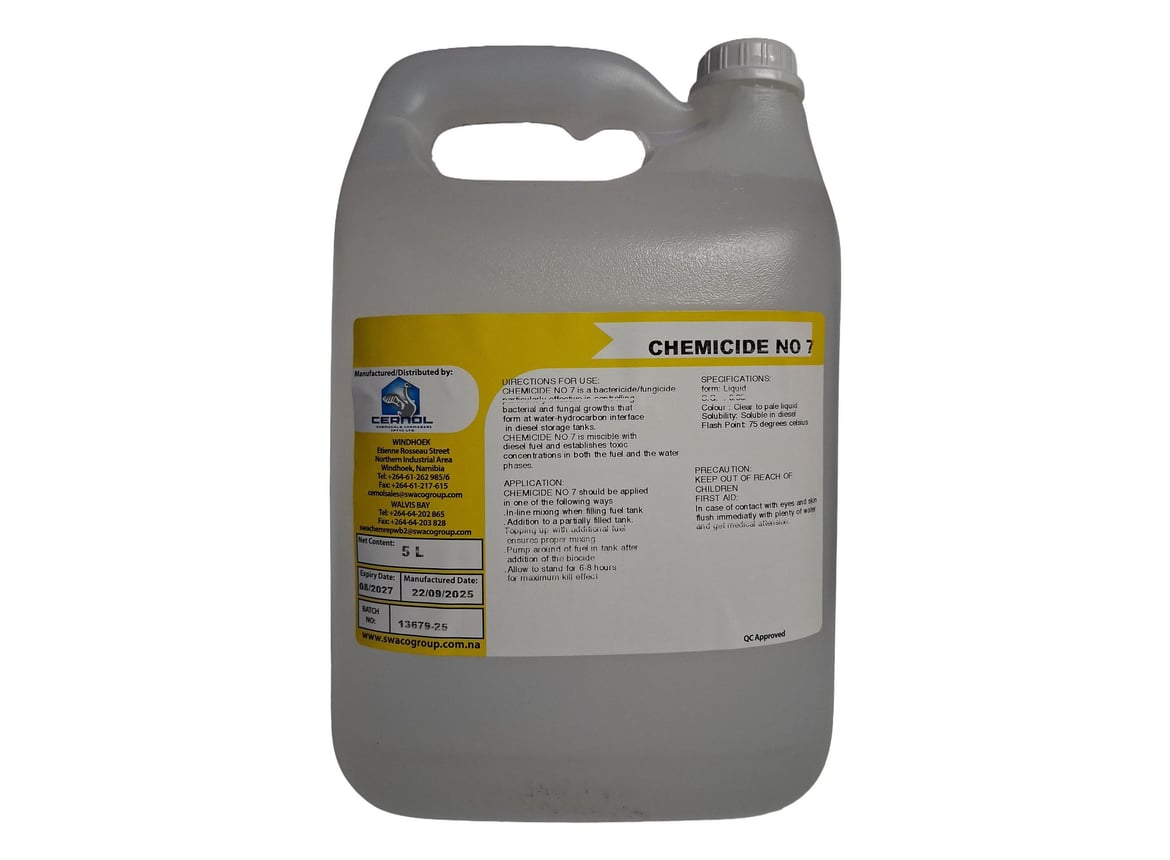
Chemicide No 7
IndustrialBiocide for diesel fuel tanks (liquid) — prevents algae growth in truck depot tanks and boat tanks.
Available in25 L
Available from: Windhoek & Walvis Bay agent
The water treatment a transport company needs is mostly about fuel and engines, not towers: Chemicide No 7 keeping depot diesel tanks free of the microbial sludge Namibian heat breeds, Magnus 614 flushing scaled radiators, and CCW 5 protecting the closed cooling circuits of the heavy fleet.
Fuel-quality management and cooling-system maintenance both feed fleet warranty compliance; treatment records with product data sheets close that loop.
Dose Chemicide No 7 with every bulk fuel delivery rather than on a calendar — contamination arrives with the fuel, and the delivery note is the natural trigger to record the dose against.
The lines transport & logistics buyers draw from this category most.
Biocide for diesel fuel tanks (liquid) — prevents algae growth in truck depot tanks and boat tanks.
Available in25 L
Available from: Windhoek & Walvis Bay agent
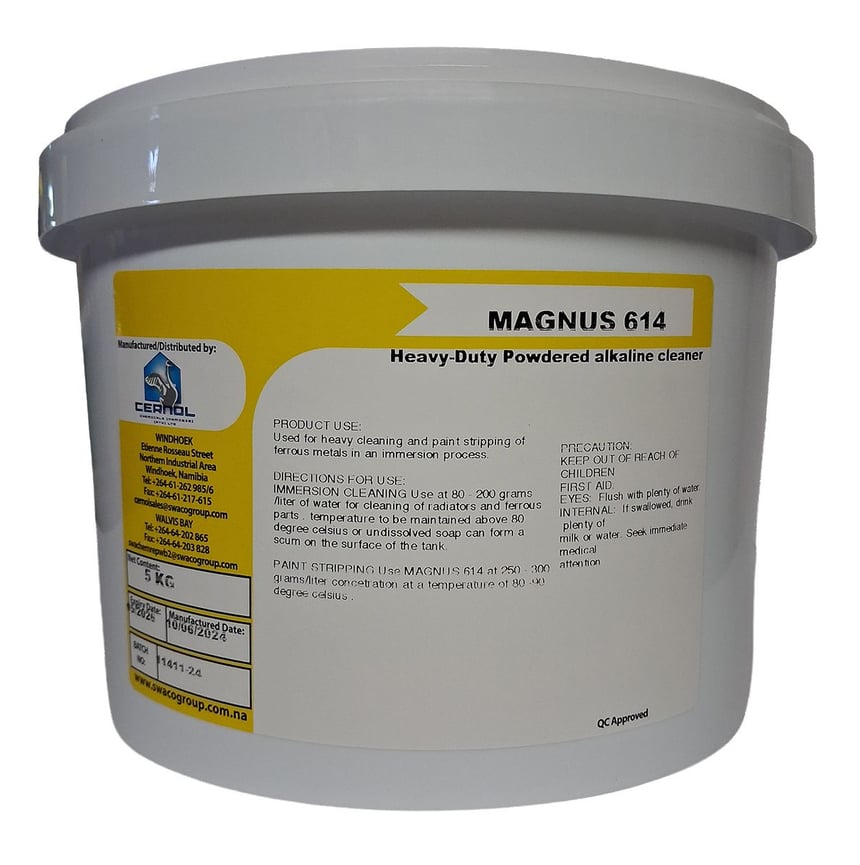
Excellent radiator cleaner (powder) — circulates with cooling water to dissolve scale and oxidation.
Available in5 kg
Available from: Windhoek & Walvis Bay agent
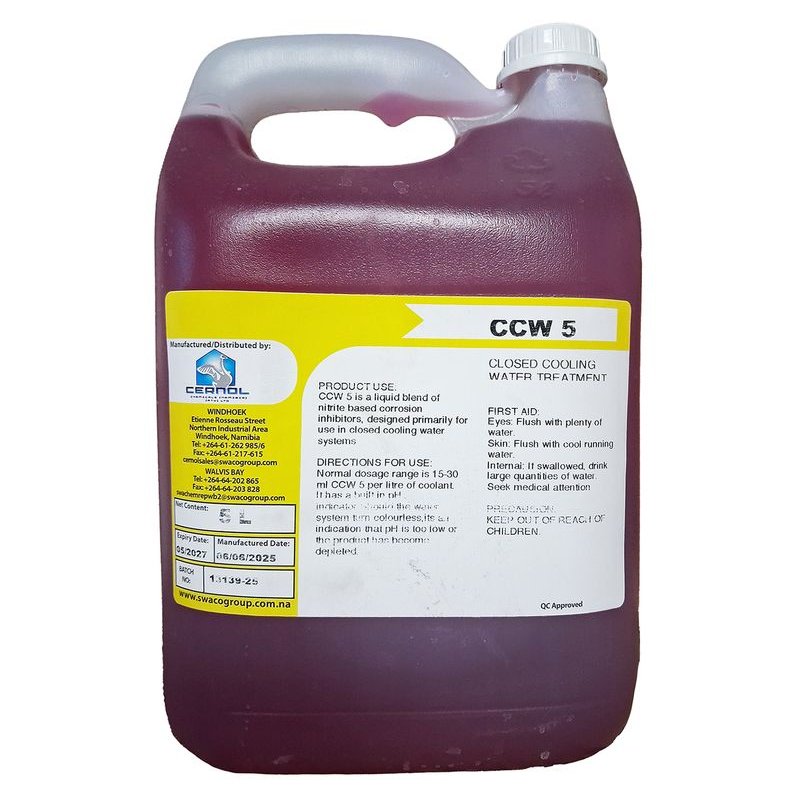
Corrosion inhibitor for closed cooling systems — diesel engines, caterpillars and heavy earthmoving equipment — with a built-in indicator.
Available in25 L200 L
Available from: Windhoek & Walvis Bay agent
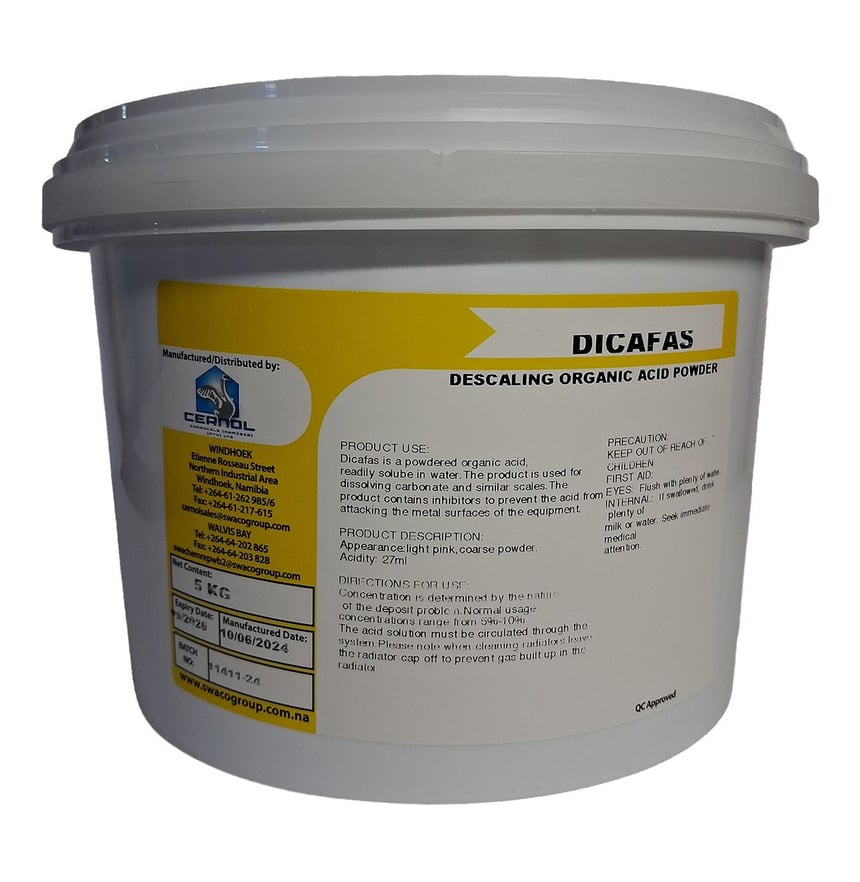
Sulphamic-acid-based descaling powder for cooling towers, radiators and heat exchangers — safer to transport than liquid acid.
Available in25 kg
Available from: Windhoek
Count filters and callouts: microbial sludge from one untreated bulk tank spreads to every vehicle that fills there, and a fleet-wide filter-blocking episode costs more in one week — filters, roadside time, missed slots — than a year of Chemicide No 7 dosing. Namibian heat cycles guarantee condensation at the fuel-water interface where the growth lives, so treatment is climate-mandatory here in a way European fleet manuals never quite convey.
When temperature creeps under load despite correct coolant level and a sound thermostat — that is scale insulating the core, typical on vehicles topped up for years with hard borehole water. Circulate Magnus 614 per label, drain, flush until clear, refill correctly, and gauge temperatures drop visibly. On the heavy fleet, follow with CCW 5 in closed circuits so the built-in indicator can prove the inhibitor charge at every service.
Treat the equipment, not the borehole: periodic Dicafas descales of steam-cleaner coils, geysers and heaters, and Limex on the fittings and urns the scale reaches first. Softening a whole depot borehole rarely pays; targeted descaling of the few heat-exchange surfaces that matter almost always does. Send us your water hardness if known — dosing gets more precise with a number.
CCW 5, charged into every closed circuit after the Magnus 614 flush: its corrosion inhibitor films the mixed metals of engine jackets and radiators, and the built-in indicator colours the coolant so the daily walk-around can verify protection at a glance. On a fleet, that visual check is the difference between a programme and a hope — fading colour means top up, strong colour means move on to the next vehicle.
Cernol Chemicals Windhoek — Factory & Sales Office · Cnr Kallie Roodt & Etienne Rosseau Street, Northern Industrial Area, Windhoek · Tel 061 262 985 · Mon–Fri 08:00–17:00
Served primarily from Cernol Chemicals Windhoek — Factory & Sales Office — 061 262 985. SDS, grades and delivery scheduling included in the quote.